Make the cover. Mix the flour and salt. Rub in the melted ghee until it is evenly distributed. Add water a little at a time and knead to a smooth, stiff dough. Cover and rest for 20–30 minutes while you prepare the filling.
Roast the first four filling ingredients. Roast the coconut, rava, sesame seeds and poppy seeds separately over low heat, stirring often. Each should smell fragrant and lose its raw taste. Let the rava turn lightly golden, and watch the coconut and seeds carefully so they do not burn. Transfer to a bowl and let everything cool.
Fry the nuts. Heat the tablespoon of ghee and gently fry the almonds and cashews until lightly golden. Add the raisins briefly, just until they plump. Take off the heat and cool.
Mix the filling. Combine the roasted ingredients, nuts and raisins with the powdered sugar and cardamom. Taste and adjust the sweetness. Keep the filling dry and let it cool completely before shaping.
Roll and fill. Divide the dough into about 20 pieces and keep them covered. Roll each into a thin, even circle, approximately 10–11 cm across. Spoon a generous tablespoon of filling onto one half, leaving a clean border. Add a little more if it fits comfortably. Remember Mith da Amma's tip: a properly filled karanji, with enough room to close it securely.
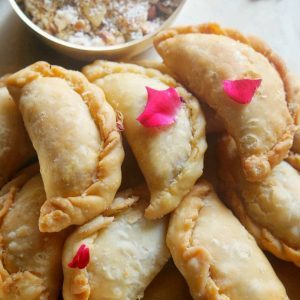
Seal the half moons. Lightly dampen the border with water, fold the empty half over the filling and press the edges firmly together. Crimp with your fingers or a fork, or trim with a pastry cutter. Check for gaps and keep the shaped karanjis covered while you finish the rest.
Fry patiently. Heat the oil over medium heat. A small scrap of dough should rise steadily with gentle bubbles rather than brown at once. Fry a few karanjis at a time over medium-low heat, turning carefully, until the covers are crisp and pale golden. Avoid crowding the pan.
Cool and share. Lift onto kitchen paper or a rack to drain. Cool completely before packing into an airtight container or adding to your Diwali faral platter.