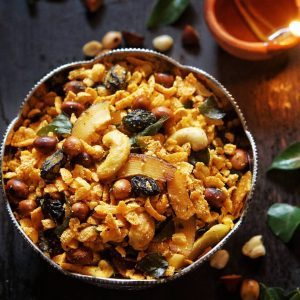
Measure the ingredients and keep them ready in separate bowls. Make sure the curry leaves and green chillies are completely dry before frying. Sieve the dry poha to remove fine crumbs. Do not soak it.
Heat the frying oil. Fry the peanuts, almonds, cashews and fried gram separately, adjusting the heat as needed, until crisp; the cashews should be light golden. Lift each out and drain on paper towels.
Fry the raisins and sultanas briefly, just until they plump up, then remove and drain. Avoid leaving them in the oil until they become dark.
If using dried coconut slices, fry them until lightly golden and crisp, then drain. If using ready-roasted coconut chips, keep them aside to add later without frying again.
Fry the dry curry leaves and green chillies separately until crisp. Remove and drain.
Keep the chilli powder, turmeric, black salt and powdered sugar beside your mixing bowl. These quantities are for the entire batch, so divide them across the small batches of poha rather than adding the full amount to each one.
Fry the thick poha in small batches using the heatproof frying strainer or skimmer. The oil should be hot enough for the flakes to puff and become crisp without turning brown. Lift out, drain well and briefly place on paper towels.
Transfer each batch to the mixing bowl while still warm. Sprinkle with a portion of the chilli powder, turmeric and black salt, followed by a portion of the powdered sugar. Toss gently to coat. Repeat with the remaining poha, distributing the seasoning across the full batch.
Add all the prepared nuts, fruits, fried gram, coconut, curry leaves and green chillies. Toss gently, taste, and adjust the black salt, sugar or chilli to your preference.
Allow the chivda to cool completely before storing it in an airtight dabba.