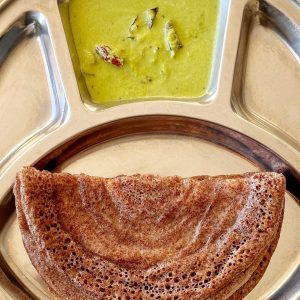
Ragi Dose
Ingredients
Ingredients
- 1 cup whole ragi (finger millet)
- ¼ cup urad dal
- 1 teaspoon methi (fenugreek) seeds
- 2–3 teaspoons soaked poha or cooked rice, optional
- Salt, to taste
- Water, as needed for soaking and grinding
- About 1 teaspoon ghee or neutral-flavoured oil per dosa
Instructions
Method
- Soak the ragi. Wash the whole ragi well and soak in water for at least 6 hours.
- Soak the dal and methi. Wash the urad dal and soak it with the methi seeds for around 3 hours. If using poha, soak it separately until softened.
- Grind the batter. Drain the soaked ingredients. Grind the ragi, urad dal and methi, either together or separately, with just enough water to make a smooth, pourable dosa batter. Add the optional soaked poha or cooked rice while grinding, along with salt. Combine thoroughly if ground separately.
- Allow a short fermentation. Cover and leave to ferment. Mom usually gives it 4–5 hours, and I check mine by 7 hours. Look for small bubbles and a lightly fermented aroma; this batter need not rise dramatically to make lovely spongy dosas. Start checking early in a warm kitchen, as ragi batter can turn sour quickly. Once fermented, use it or refrigerate it.
- Pour and spread. Heat a dosa pan over medium heat. Pour a ladleful of batter and spread gently into a round dosa. Keep it a little thicker if you like a spongier centre.
- Cover and cook. Drizzle about 1 teaspoon ghee or neutral-flavoured oil over the dosa. Cover and cook until the top deepens in colour and the batter is set. These dosas need a little patience.
- Flip once. Turn the dosa over to cook the other side evenly. Serve hot with the chutney below.
Notes
The 4–7-hour window reflects Mom's and my experience with this batter, rather than a fixed rule for every kitchen. Temperature affects fermentation. Check the batter's signs instead of waiting for a large rise, and avoid leaving it out long after it has fermented.