
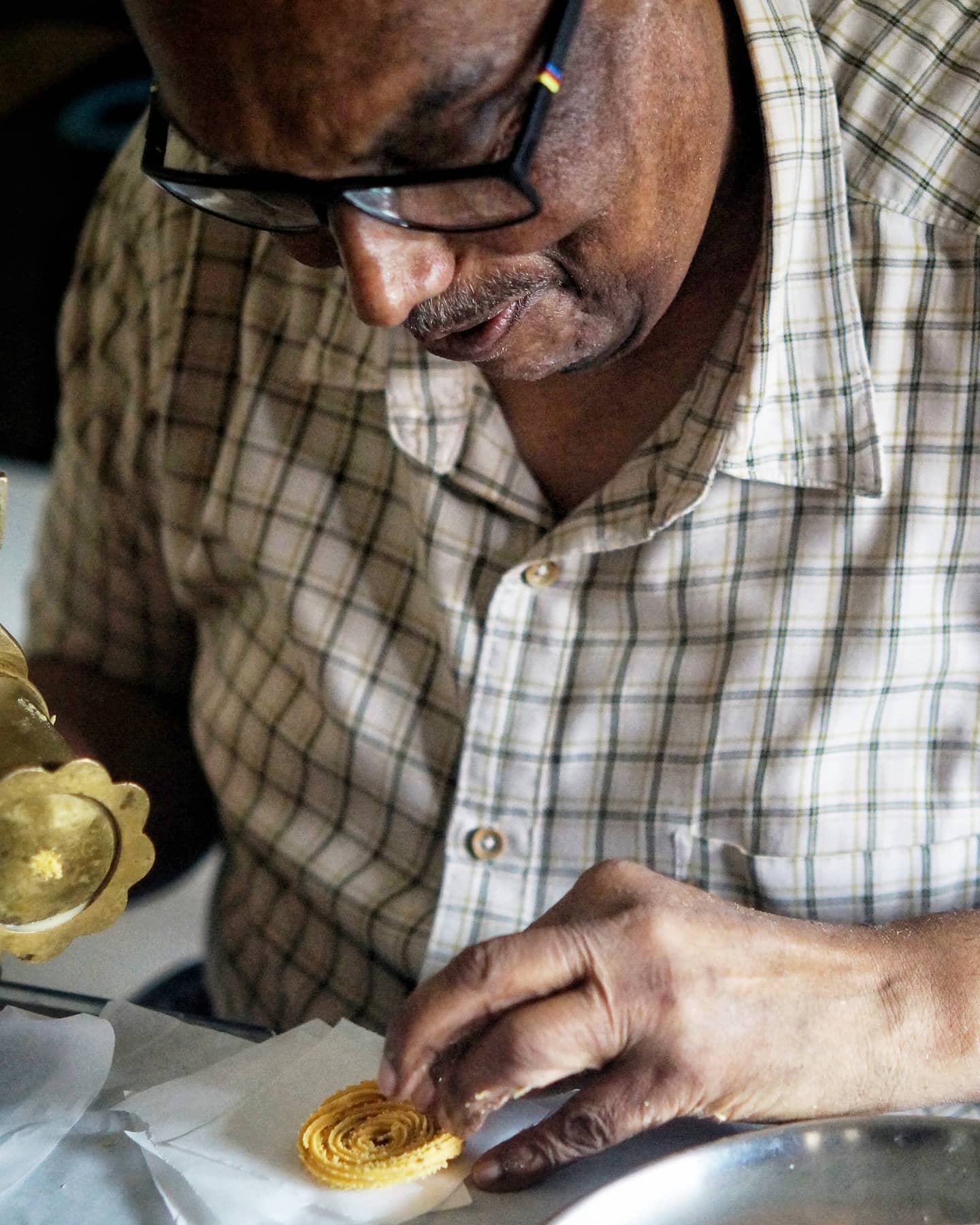
Chakulis and 1950s songs go hand in hand in our home. Whenever I make these spirals, I think of Pappa at the dining table, piping them so neatly and effortlessly. I still wish I could pipe them the way he does.
Growing up, making chakulis for Diwali was a family affair. Pappa would pipe them onto little newspaper cuttings or parchment paper squares, and we would carry them to Mom in the kitchen, where she fried them. Then it was back to the dining table with the squares, ready for Pappa to pipe the next round. Everyone had a part in the making, and mine was the passing-them-to-Mom duty.
Years later, when I photographed him making a special batch for our sweet Ganesha, there I was, still doing the same job. Pappa with the chakuli maker, Mom frying, and me carrying the spirals between them. There is so much of home in that little journey from the dining table to the kitchen.
By the Diwali batch I shared in 2020, Mom and I were both doing the frying, and Leo got the crunchy extras. He had his part in the tradition too. It is these small things I remember alongside the chakulis themselves: the music, Pappa’s piping and everyone taking part.
This ooru recipe comes from my paternal side of the Salian family. It is made entirely with rice flour. I have tried other versions, but I keep coming back to the one Mom and Dad made together over so many Diwalis. The main change we made was to use unsalted butter in the dough instead of the coconut oil suggested by Dad’s family. I also add a little chilli powder and haldi, though you can leave those out for the plain version.
My parents’ two important tips are to keep the rice flour, water and butter in the right ratio, and to fry in medium-hot oil. For every 500 g rice flour, use 500 ml water and 50 g butter. The rest is in keeping the dough covered, kneading each portion well and giving the chakulis time to fry.
In the more recent recipe reel, I used a new chakuli maker that Mom had packed for me. It was easy to pipe with, but Pappa’s spirals are still the ones I try to match. This is the chakuli recipe I want to keep here, with Mom and Dad’s tips and all the love that has gone into making it at home.
Equipment
- Chakuli/chakli maker with the spiral-piping attachment
- Small parchment paper squares
- Slotted spoon
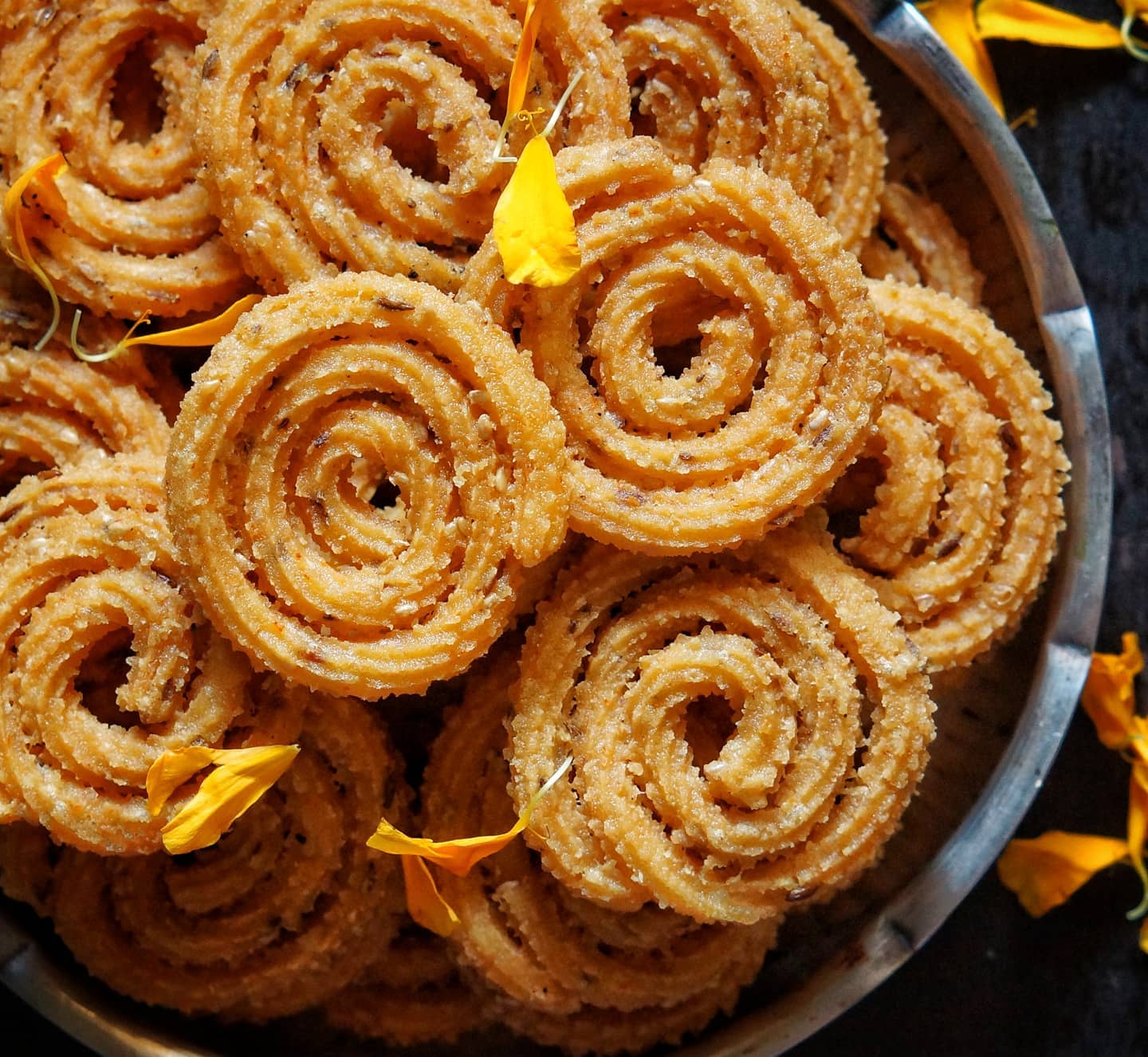
Chakuli: Pappa's Spirals and Our Diwali Tradition
Ingredients
Ingredients
- 500 g rice flour
- 500 ml water
- 50 g unsalted butter
- 1½ tbsp cumin seeds
- 1 tbsp white sesame seeds
- 1 tbsp black sesame seeds
- 1½ tsp red chilli powder, optional
- ½ tsp turmeric powder, optional
- 1 tsp salt, or to taste
- Oil, for deep frying
Instructions
Method
- Bring the 500 ml water to a boil in a pan.
- Add the cumin seeds, both sesame seeds, salt and butter. Add the chilli powder and turmeric if using. Stir well and bring back to a boil.
- Switch off the heat. Add the rice flour and mix roughly until the flour is incorporated. Cover for around 5 minutes, or until cool enough to handle.
- Keep the dough covered with a moist cloth. Take one portion and knead it well before putting it into the chakuli maker.
- Pipe spirals onto parchment paper squares, pressing the end gently against the spiral to secure it.
- Heat the frying oil until medium-hot. Carefully lift each chakuli from the parchment and lower it into the oil, one at a time. Fry in batches, turning as needed, until cooked and the bubbling has almost stopped.
- Lift out with a slotted spoon and drain on paper towels. Knead and pipe the next portion of dough, keeping the remaining dough covered.
- Let the chakulis cool completely before storing in an airtight dabba.
Notes
- Keep the base ratio: 500 g rice flour, 500 ml water and 50 g butter. This is the starting ratio my parents recommend.
- Fry in medium-hot oil: oil that is too cool can leave the chakulis oily.
- Keep the dough covered: use a moist cloth so it does not dry out while you work.
- Knead each portion: kneading before filling the maker helps reduce breakage while piping.
- Watch the dough consistency: it should be firm enough to hold the spirals while still passing through the maker. In the recipe reel, my first batch of dough was a little soft, so I added a little more rice flour and kneaded it again.
- Test a small batch first: fry and taste a small batch to check the salt. If needed, add a little salted water and rice flour to the dough and knead again, adjusting gradually.
- For the plain version: leave out the chilli powder and turmeric. Both versions appear in the 2021 reel.
For more of our festive snacks, try Mom’s Poha Chivda and Khara Kaddi.
