
Some breakfasts bring that familiar Mangalorean feeling with very little fuss at the table. A plate of hot, coconuty pundi, a chutney on the side and filter kaapi. That was my hearty Saturday breakfast in the photograph, and it is still such a lovely way to start the day.
Nesal means tempering in Tulu, and here it goes right into the rice and coconut mixture before the pundi are shaped and steamed. The mustard seeds, golden urad dal and curry leaves make these dumplings lovely even on their own. A little chutney just adds another layer of flavour.
For a quicker morning, I like the idea of doing the soaking, grinding and shaping ahead, leaving only the steaming for breakfast. There is no batter fermentation to wait for. A little preparation, and the morning can begin with something warm and familiar.
Here, I am pairing Nesal Pundi with Kempu Chutney, a Byadagi chilli coconut chutney with garlic and tamarind. Hot pundi, a spoonful of this red chutney and filter kaapi make such a lovely breakfast together.
Try Marwai Pundi / Kube Mutli for a curry pairing.
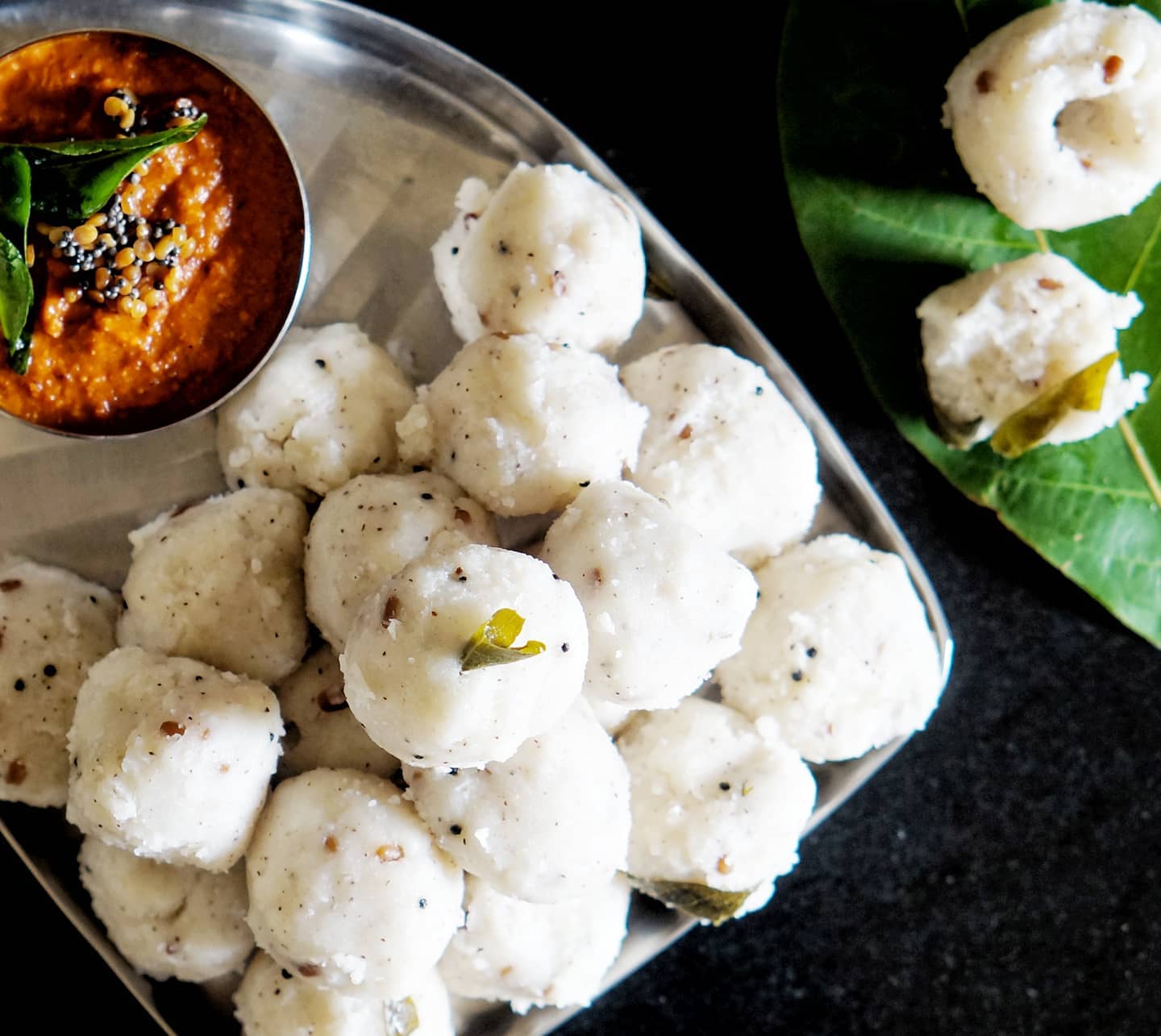
Nesal Pundi
Ingredients
For the rice and coconut dough
- 1 cup uncooked rice: Mangalorean boiled/parboiled rice or dosa rice
- ½–1 cup fresh grated coconut
- 1–1½ cups water in total for grinding and cooking, adjusted as needed
- 1 teaspoon salt, or to taste
- 1 teaspoon oil or ghee, for greasing hands and the steamer plate
For the nesal (tempering)
- 1 teaspoon oil
- ½ teaspoon mustard seeds
- 1 teaspoon urad dal
- A few curry leaves
- A pinch of asafoetida (hing)
Instructions
Method
- Soak the rice. Wash the rice and soak for 2–4 hours, until softened enough to grind. Firmer boiled/parboiled rice may need longer or an overnight soak. Here, boiled rice means the uncooked parboiled grain, not leftover cooked rice.
- Grind coarsely. Drain the rice and grind it with the coconut, salt and enough of the measured water to help the grinder work. Keep a fine, grainy texture rather than making a completely smooth paste. Mix in the remaining water gradually to form a thick, pourable batter; you may not need all of it at once.
- Make the nesal. Heat the teaspoon of oil in a heavy-bottomed pan. Add the mustard seeds and let them splutter. Add the urad dal and cook until golden, then add the curry leaves and hing briefly.
- Cook the dough in the tempering. Pour the rice-coconut batter into the same pan. Cook over low to medium heat, stirring and scraping the base continuously. The mixture should thicken, leave the sides and come together into a firm but pliable dough. If it becomes stiff while the rice is still undercooked, add a small splash of water and continue stirring. Switch off the heat when the dough holds together.
- Shape while warm. Let the dough cool just enough to handle. Lightly grease your palms or moisten them with water. Take small lemon-sized portions, roll into balls and press a thumbprint into the centre of each.
- Steam. Arrange on a greased steamer plate or idli stand. Place over already-steaming water, cover and steam over medium heat for 15–20 minutes. The pundi should be firm and cooked through, with no raw rice taste at the centre; allow longer if your rice or dumpling size needs it.
- Serve hot. Serve with Kempu Chutney below and a cup of filter kaapi, or enjoy them on their own with the flavour of the nesal in every bite.
Notes
- Tempering belongs in Nesal Pundi. It is included in both the ingredients and the method, before cooking and shaping the dough.
- Keep some texture. Coarsely ground rice gives these pundi their characteristic bite. Avoid making the paste completely smooth.
- Water depends on the rice. The 1–1½ cups is the starting allowance for grinding and cooking together, not two separate additions of that amount.
- Adjust the coconut within the range. Use the supplied ½–1 cup according to how coconuty you like the dumplings.
- Both chutney temperings are separate. The pundi have mustard, urad dal, curry leaves and hing in their dough; Kempu Chutney has its own mustard and curry leaf tempering.
Kempu Chutney
This is also available as a standalone Kempu Chutney recipe.
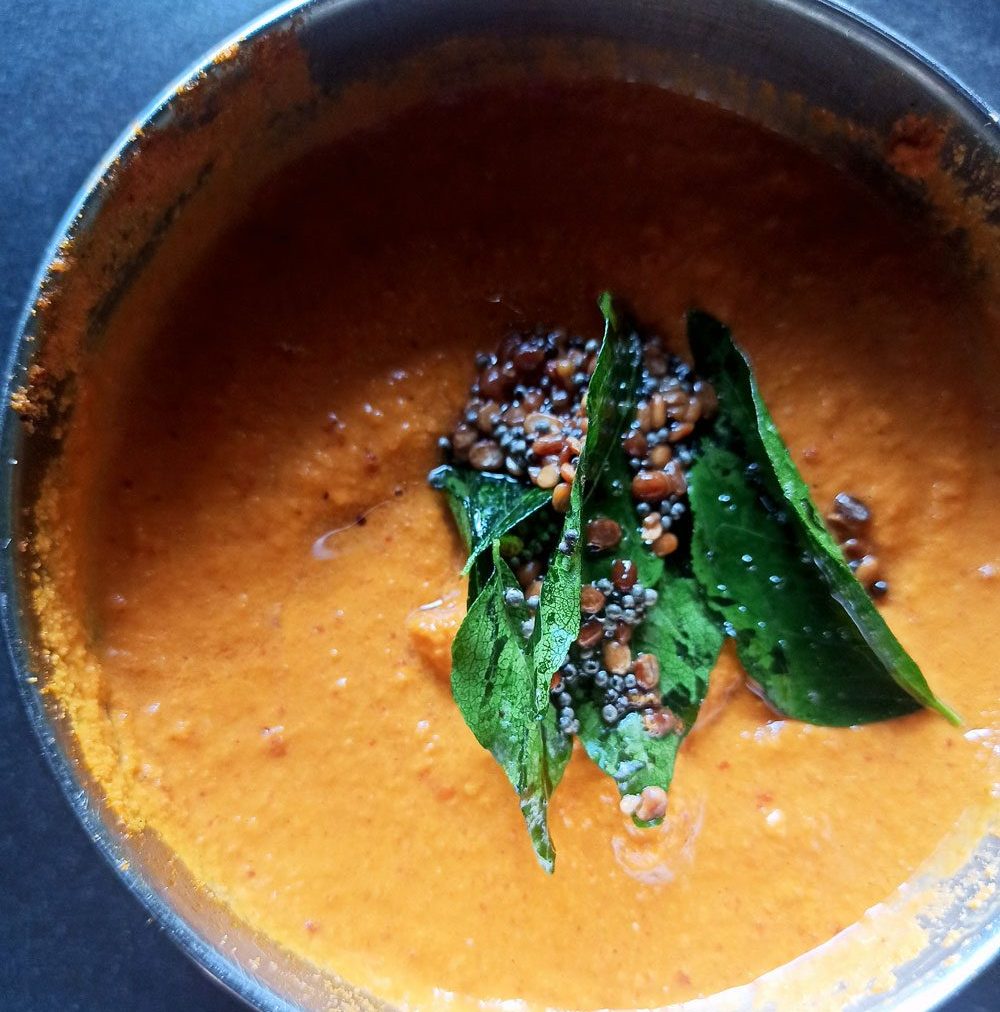
Kempu Chutney / Byadagi Chilli Coconut Chutney
Ingredients
Ingredients
- 1 cup fresh grated coconut
- 3–4 garlic cloves, or more for a stronger garlic flavour
- 7–8 dried Byadagi red chillies
- A small ball of tamarind
- Salt, to taste
- Water, as needed
For the tempering
- 1 teaspoon coconut oil
- ½ teaspoon mustard seeds
- A few fresh curry leaves
Instructions
Method
- Grind the chutney. Put the grated coconut, dried Byadagi chillies, garlic, tamarind and salt into a grinder. Add a small amount of water and grind to a smooth, thick paste. Scrape down the sides as needed, adding water gradually rather than all at once.
- Check the seasoning. Transfer to a bowl. Taste and adjust the salt and consistency to your liking.
- Make the tempering. Heat the coconut oil in a small pan. Add the mustard seeds and let them splutter, then add the curry leaves briefly.
- Finish and serve. Pour the hot tempering over the chutney and mix. Serve with hot idlis, dosas or Nesal Pundi.
Notes
- Start with 3–4 garlic cloves and add more if you like a stronger garlic flavour.
- Keep the chutney thick for scooping, or loosen it with a little water for pouring around your idlis.
- Byadagi chillies are the chillies specified in this recipe. Their heat can vary, so adjust the quantity to suit your batch and taste.
- The coconut oil, mustard seeds and curry leaves are the finishing tempering and are included as part of the recipe.