
Sannas are my love language. Soft, fluffy little pillows, ready to mop up every bit of a good pork gravy.
In the Crasta home, Sannas are made for special occasions. With Dukra Maas, whether it is the familiar Bafat or the sweet, spicy and tangy Pork Indad, they are such a lovely part of the meal. For our Easter lunch with friends, it was Mai’s Indad and a batch of these soft Sannas.
They are part of our Christmas table too. One Christmas Eve, after evening Mass, Nishal made Dukra Maas ani Sanna. We started with port wine and slices of Vienna plum cake before moving on to that little feast. These are the traditions I love keeping close.
I make my Sannas with yeast because fresh toddy is difficult to find here. There are two things I pay particular attention to: good-quality yeast and generously greased gindalas. And then there is the batter itself. Yeast has a mind of its own, so this is one recipe where I watch the rise rather than simply leave it to the clock.
Pair these Sannas with Mai’s Pork Indad.
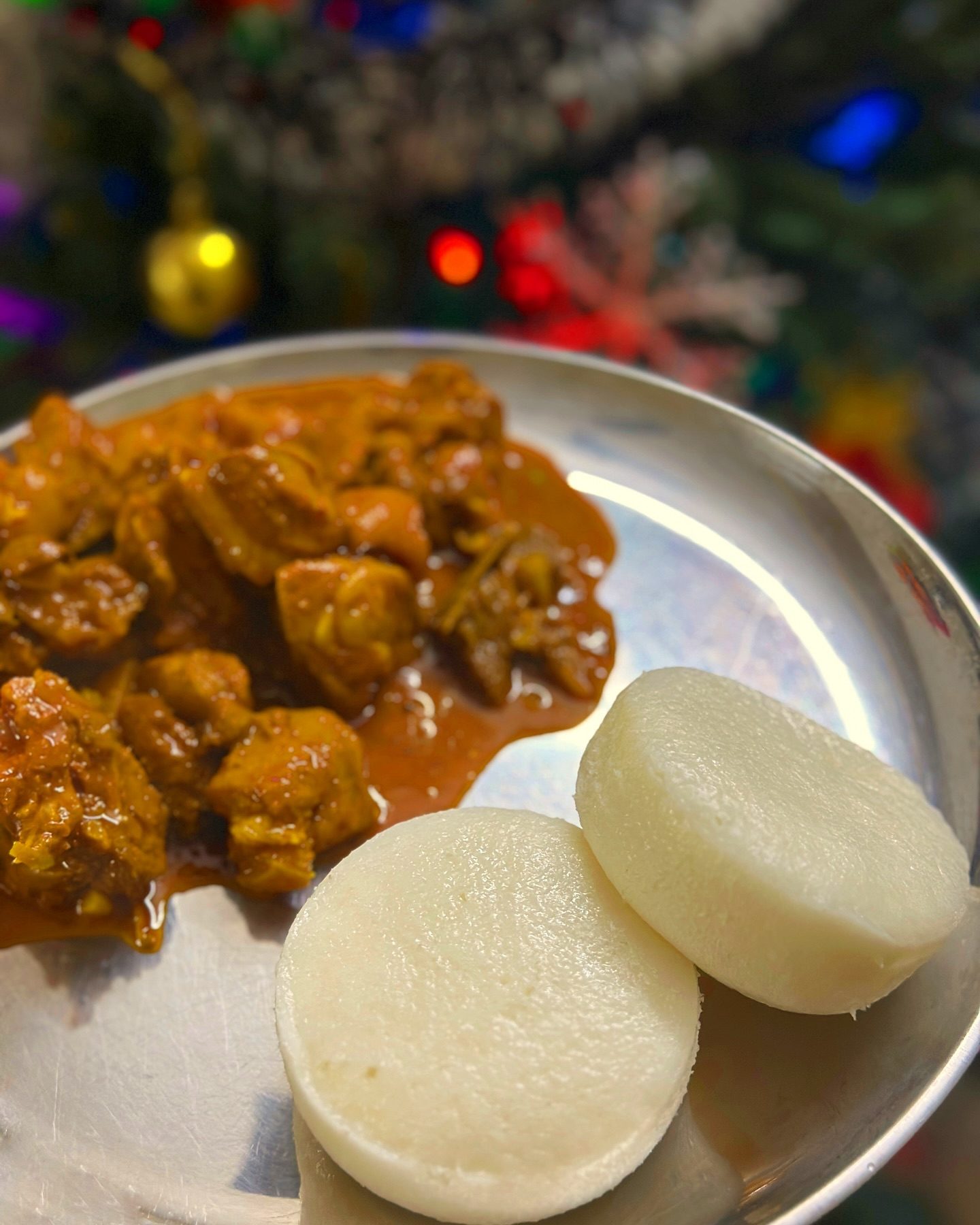
Sannas: Soft Mangalorean Rice Cakes from the Crasta Home
Ingredients
Ingredients
- 3 cups idli rice
- 1 cup Matta rice (uncooked parboiled rice)
- ½ cup urad dal
- 2 teaspoons active dry yeast
- 2 teaspoons sugar, plus a little extra to taste
- Salt, to taste
- Water, as needed for soaking, activating the yeast and grinding
- Coconut oil, for generously greasing the moulds
Instructions
Method
- Soak overnight. Wash the idli rice, Matta rice and urad dal. Soak each separately in plenty of water overnight. Drain before grinding.
- Wake up the yeast. Put the 2 teaspoons of sugar and yeast into a little lukewarm water. Cover and leave for about 10 minutes, until it froths well. I use this time to start grinding. The water should be lukewarm, not hot.
- Grind separately. Grind each rice variety and the urad dal separately into fine, smooth batters, adding water gradually as needed. The smoother the better.
- Bring the batters together. Combine them in a large bowl with plenty of room for rising. Add salt and enough water to make the mixture slightly thinner than idli batter. Stir in the frothy yeast mixture. The batter should have a gentle sweetness, so add another teaspoon or two of sugar if needed.
- Let it rise. Cover and leave to ferment until the batter doubles. This often takes around 3 to 5 hours in my kitchen, but I have seen it rise within 2 hours in some weather conditions. Keep an eye on it. I prefer grinding early in the morning so I can watch it.
- Prepare the moulds and steamer. Grease the gindalas generously with coconut oil. Get the steamer ready with boiling water before adding the filled moulds.
- Scoop gently. Once the batter has doubled, do not stir it. Gently scoop it into the greased moulds, filling each to less than halfway so there is room for it to rise.
- Steam. Put the moulds into the steamer, cover and steam for about 12 minutes, until the Sannas are cooked through. If using different-sized moulds, allow extra time as needed. A skewer inserted into the centre should come out without wet batter.
- Cool and unmould. Let them cool before removing them. My easy way is to turn the moulds upside down over a plate and put a damp cloth over their bases. The Sannas usually drop out. For a stubborn one, gently ease it away from the edge with clean fingers or give the mould a little tap.
- Serve. Bring them to the table with Pork Indad or Bafat, ready for all that lovely gravy.
Notes
- Good yeast makes a difference. It should froth well during activation. If it does not, check the yeast and water temperature before adding it to the batter.
- Be generous with the coconut oil. Well-greased moulds make unmoulding much easier.
- Watch the rise. The batter doubling is the cue, rather than a fixed fermentation time.
- Do not stir after fermentation. Scoop gently to keep that airy batter intact.
- Leave room in each mould. Less than half full is the way I do it.
- A note on toddy. My earlier caption mentions using a glass of fresh palm toddy instead of yeast, added while grinding. The recipe card here is for my yeast version, with its stated quantities and method.
