
There is a parimaala to this Saar that takes me straight back to prasada vanas in Mangalore devastanas. The spices roasting, the coconut turning golden, and that final tempering of mustard, hing and curry leaves. A familiar festive smell, even when I am far from home.
One Dasara fell on a working day here, so our proper celebration had to wait until the weekend. I still made this Saar as part of a simple bhog for Devi. Sometimes that little pot is enough to bring the feeling of the festival into the kitchen.
There are two ways we make Saar at home. For festivals, it is this freshly ground masala. For other days, there is Mom’s homemade Saar powder, kept ready in a jar. I make and refill mine every three months or so. After a month of eating out, a plate of Kolumbu Saar, Nuppu, Gujje Ajadina bokka Sandige was just the taste of home I wanted.
Here are both ways from my Saar highlight: the freshly ground version for when there is time to roast and grind, and the powder to keep ready for another day’s meal. Either way, hot rice is waiting.
Temple-style Saar with Freshly Ground Masala
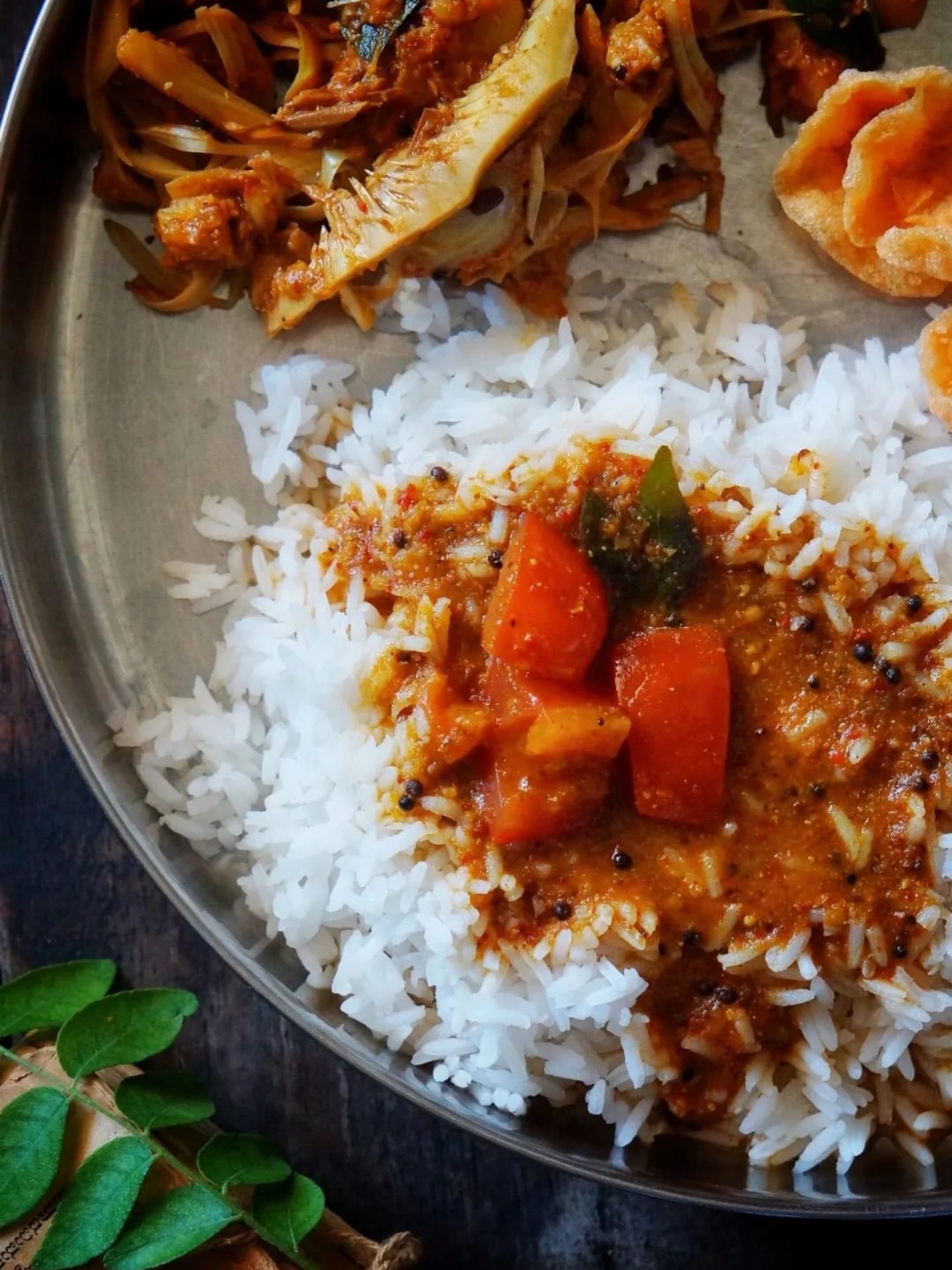
Temple-style Saar with Freshly Ground Masala
Ingredients
For the masala
- 2 tablespoons fresh grated coconut, roasted until golden-brown
- 5 to 6 dried Byadgi chillies, roasted
- 2 tablespoons coriander seeds, roasted
- 1 tablespoon cumin seeds, roasted
- 2 tablespoons urad dal, roasted
- 1 tablespoon whole peppercorns, roasted
- ½ teaspoon fenugreek seeds, roasted
- 1 teaspoon turmeric powder
- A small ball of tamarind
- Water, just enough for grinding
For the Saar and tempering
- A little coconut oil
- Mustard seeds, for tempering
- A few curry leaves
- A pinch of hing
- Chopped tomato, optional
- 2 tablespoons cooked dal, optional
- A small piece of jaggery, optional
- Salt, to taste
- Water, as needed for a thin, pourable Saar
Instructions
Method
- Take a little time with the roasting. Roast the coconut until golden-brown. Separately roast the coriander, cumin, urad dal, peppercorns, fenugreek and Byadgi chillies until fragrant, keeping the heat gentle. Let everything cool before grinding.
- Grind the masala. Grind the roasted ingredients with the turmeric and tamarind into a paste, adding just enough water to help the mixer along. I leave a little texture in the masala.
- Start with the tempering. Heat a little coconut oil in a pot. Add the mustard seeds and let them splutter, then add the curry leaves and hing. That familiar parimaala has already begun.
- Add tomato if you like. Chopped tomato brings extra tanginess. Add it at this stage if using it. You can also add 2 tablespoons of cooked dal.
- Add the masala. Stir in the ground paste and salt. A small piece of jaggery can go in now, if you like that touch of sweetness.
- Thin it into Saar. Add water until the consistency is thin and easy to pour over rice. Bring it to a boil and cook until the tomatoes, if added, are tender and the masala is cooked through.
- Serve piping hot. Freshly cooked rice and a ladleful of Saar. Gujje Ajadina and Sandige alongside make it a lovely plate of home.
Homemade Saar Powder
Homemade Saar Powder
Ingredients
For the powder
- 4 to 5 dried Byadgi chillies
- 2 tablespoons coriander seeds
- 1 tablespoon cumin seeds
- 2 tablespoons urad dal
- 1 tablespoon whole peppercorns
- ½ teaspoon fenugreek seeds
- 8 to 10 curry leaves
- 1 teaspoon turmeric powder
- ½ teaspoon hing
Instructions
Method
- Roast patiently. Roast the chillies, coriander, cumin, urad dal and peppercorns separately until fragrant, and the fenugreek lightly without letting it burn. Roast the curry leaves until dry and crisp.
- Let everything cool. The ingredients should be completely cool before they go into the mixer.
- Grind finely. Grind the roasted ingredients with the turmeric and hing into a fine powder.
- Keep it ready. Transfer to a clean, dry, airtight jar. Use a dry spoon each time.
Notes
Make Saar with the powder
- 2 tablespoons homemade Saar powder
- A little coconut oil
- Mustard seeds, for tempering
- A few curry leaves
- Chopped tomato, as preferred
- Tamarind, softened in water, to taste
- A little jaggery, to taste
- Salt, to taste
- Water, as needed for a thin Saar
- Heat a little coconut oil in a pot. Add mustard seeds, let them splutter, and add the curry leaves.
- Add the chopped tomato.
- Soften the tamarind in water, squeeze out its juice and strain out the seeds and fibres. Add the tamarind water to the pot.
- Stir in 2 tablespoons of Saar powder, a little jaggery and salt. Add water as needed to get that thin Saar consistency.
- Bring to a boil and cook until the tomato is tender and the spices are cooked through. Taste and adjust the salt, sourness and sweetness, then serve hot with rice.
Notes from my kitchen
- Two versions, two preparations. Use either the fresh masala or the powder method. The powder blend contains no coconut, tamarind or jaggery; tamarind and jaggery are added when making the Saar.
- A lighter variation. The quantities above follow my 2020 highlight. In my later Dasara caption, I used 1 teaspoon peppercorns, ¼ teaspoon fenugreek and ¼ teaspoon turmeric for the freshly ground version, keeping the same coconut, coriander, cumin, urad dal and chilli quantities. Choose that variation if you prefer the lighter spice proportions.
- Keep the coconut golden. Roast patiently rather than letting it turn burnt and bitter.
- Tomato and cooked dal are optional in the fresh version. The mustard, hing and curry-leaf tempering is part of that recipe.
- Water is adjusted by consistency. Add it gradually until the Saar is thin enough to pour over rice.
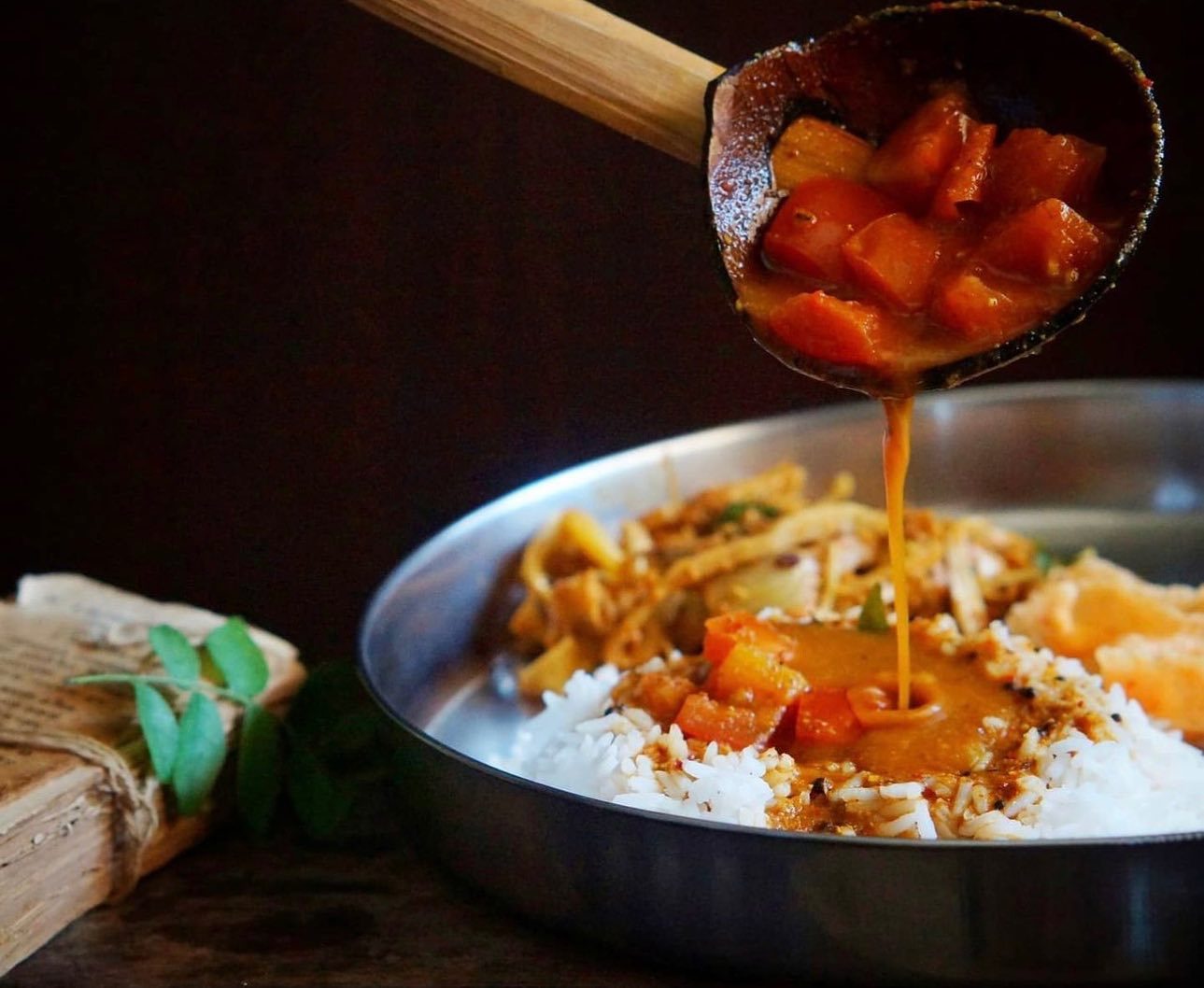
Read more about Mangalore’s temples, or find another family lunch recipe with Padengi Thetla Da Gassi.
