
Sometimes the simplest preparations bring out the flavour of the greens best. Thetla Pulimunchi is one of those dishes. The Alu Pata leaves are rolled into knots, with their own flavour at the centre of the preparation.
We also add dant, a mix of colocasia and amaranth stalks. For the plate in this photograph, I had saved some knots from our festive version made without garlic, then prepared them with a flavourful browned-garlic tempering. A little rice alongside was all it needed.
The same leaf knots find their way into our coconut curries too, especially Padengi Thetla da Gassi with sprouted green moong and ambade. Two preparations, each with its own flavour, using those familiar knots.
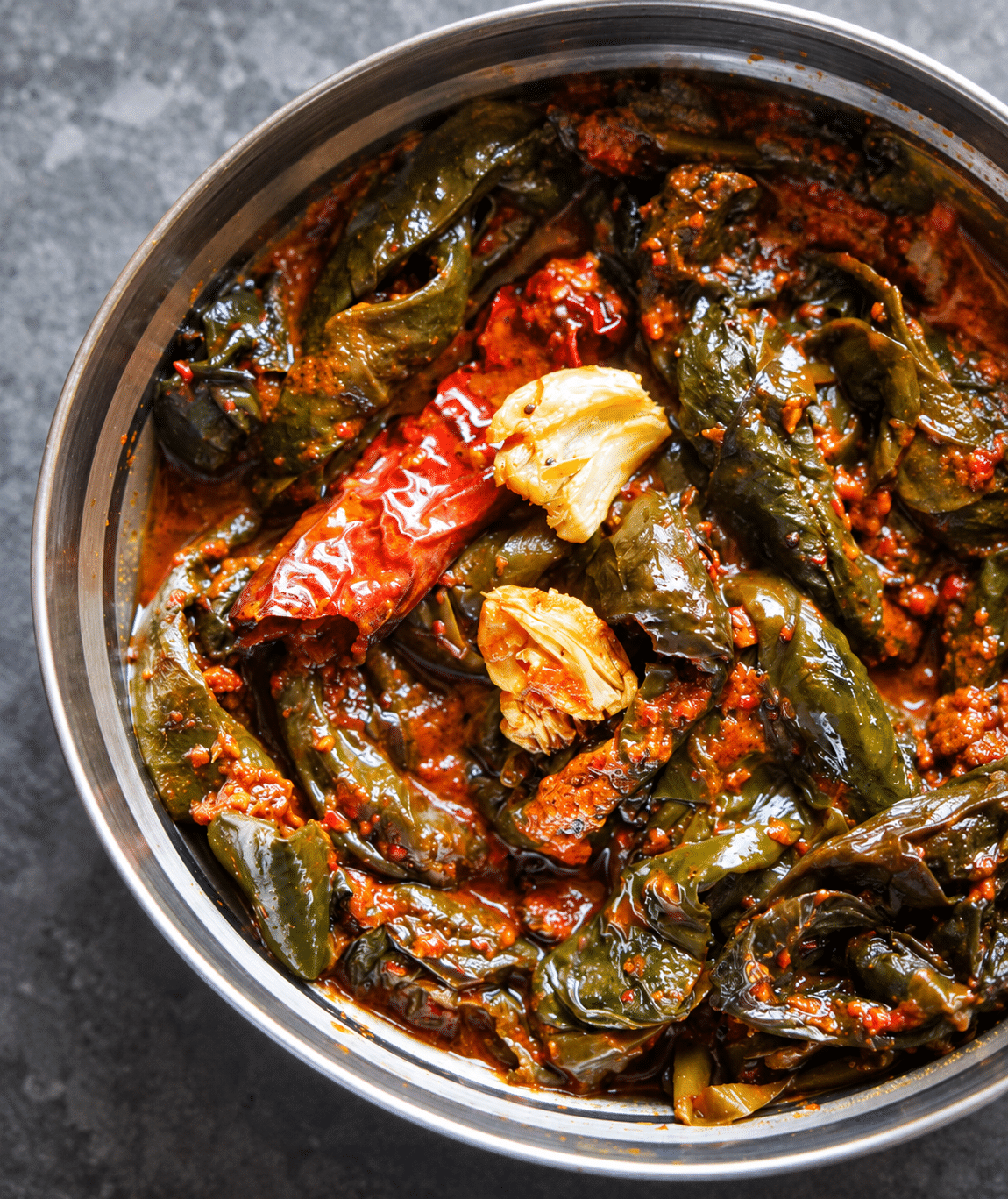
Thetla Pulimunchi | Colocasia Leaf Knots
Ingredients
For the leaves
- 500 g edible colocasia leaves (Alu Pata) prepared weight; cleaned, thick mid-veins removed and rolled into knots
- turmeric and tamarind a little, for the leaf-preparation water
- water as needed for cooking
Pulimunchi paste
- 11–14 dried Byadgi chillies
- 1 small lemon-sized ball of tamarind
- 2 tsp jaggery
- 1/2 tsp turmeric powder
- salt to taste
- water a little, for grinding
Tempering
- 1 tbsp coconut oil
- 1 tsp mustard seeds
- 2 dried Byadgi chillies additional to those in the paste
- 5 garlic cloves crushed; omit for the festive garlic-free version
Instructions
- Clean the colocasia leaves and remove the thick mid-veins. While preparing them, soak in water mixed with a little turmeric and tamarind. Drain before rolling.
- Roll each leaf into a narrow length and gently tie into a small knot. Take your time with the first few.
- Grind the Byadgi chillies, tamarind, jaggery, salt and turmeric into a smooth paste, adding a little water to help the mixer along.
- Put 2 tablespoons of the paste into a pan with some water. Add the leaf knots and cook thoroughly. These leaves take at least 15 minutes in my preparation. Continue cooking as needed until the knots are fully tender, including their centres, adding water if the pan begins to dry out.
- Once the knots are fully cooked, add the remaining paste and mix gently. Check the seasoning for a balance of spice and sourness, with a hint of sweetness.
- Cook for another 2 to 3 minutes, until the added paste is cooked through, then turn off the heat.
- Heat coconut oil in a small pan. Add mustard seeds and let them splutter, then add the dried red chillies and crushed garlic. Let the garlic brown without burning. Pour over the leaves and mix gently.
- Serve as a side dish with rice.
Notes
Notes from my kitchen
- The knots need time in the pan. The preparation soak and removing the veins do not replace thorough cooking. Check the centre of a knot before adding the remaining masala.
- Add the paste in two stages. The first 2 tablespoons go into the cooking water. Add the rest after the leaves are cooked.
- Keep the balance. Tamarind brings sourness, Byadgi chillies bring spice, and jaggery gives a hint of sweetness.
- For our festive version, leave out garlic. Keep the coconut-oil, mustard and chilli tempering.
Save the tender stalks for Dant da Kajipu, our coconut curry with colocasia and amaranth stalks.