
Some of our old home recipes begin with the parts of a vegetable that might otherwise be put aside. Dant da Kajipu is one of them. The thick stalks of Alu Pata, or colocasia leaves, and the thinner stalks of chawli, or amaranth, are saved for this curry. They bring their own flavour to the coconut masala, finished with golden garlic and a coconut-oil tempering.
During festivals, when there are several dishes to prepare, this is a lovely way to add another dish to the spread. The Alu Pata leaves are tied into knots for a soupy, tangy broth, the chawli leaves become an upkari, and the stalks come together in this Kajipu. Three dishes from two vegetables. That is the beauty of these old recipes, making good use of what is already in the kitchen.
We also add ambade, or hog plums, when they are available. Their tartness is lovely in this curry. I could not find them in my local market when I made the plate in these photographs, so this version uses tamarind.
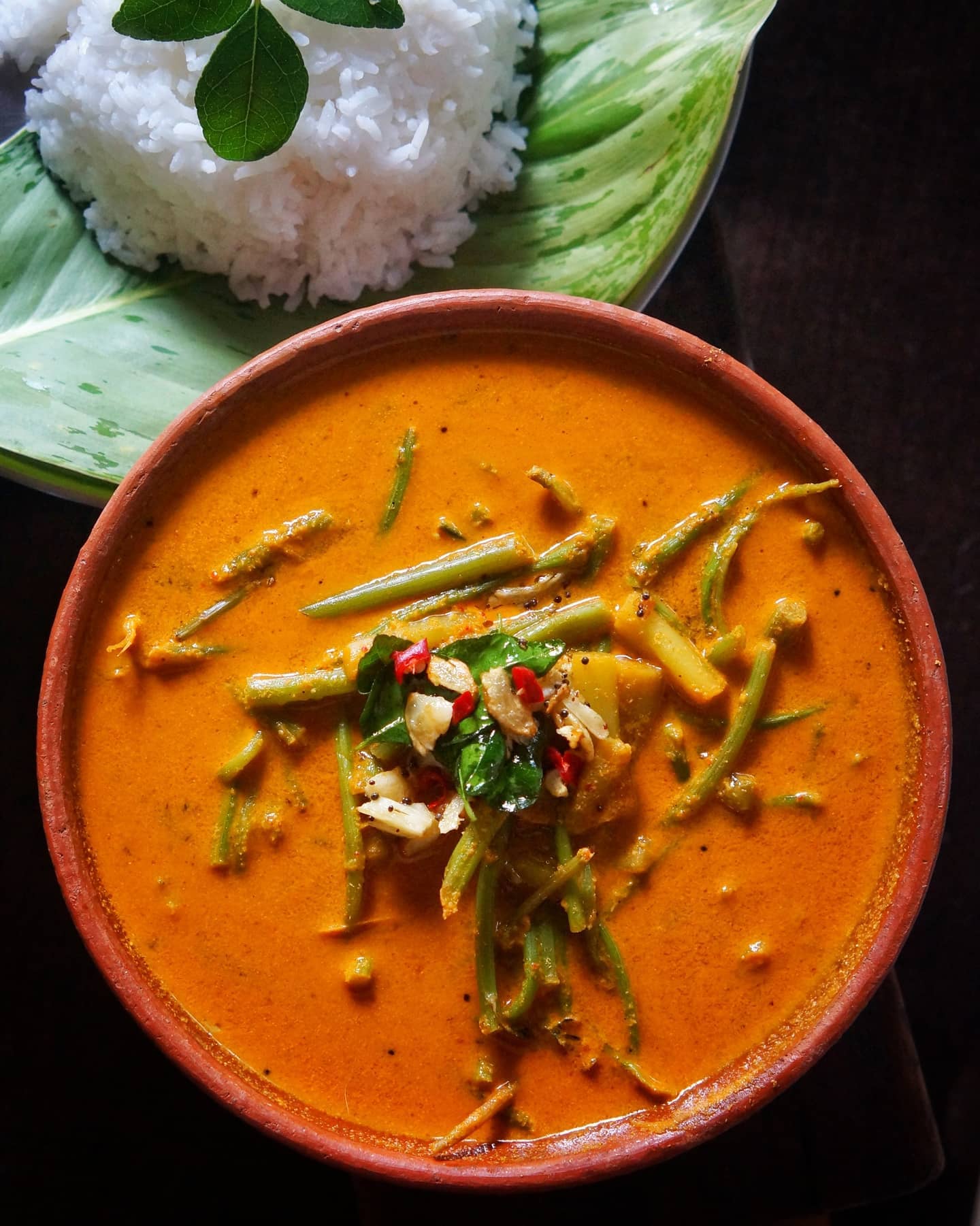
Dant da Kajipu | Colocasia and Amaranth Stalk Curry
Ingredients
The stalks
- 500 g colocasia and tender amaranth stalks combined prepared weight; outer fibres removed where needed, cut into chunks
- tamarind a little, for cooking the stalks
- salt to taste
- water as needed
- 2 hog plums (ambade) optional, if available
Coconut and spice paste
- 1/2 cup freshly grated coconut
- 5–7 dried red chillies roasted
- 1 tbsp coriander seeds roasted
- 1 tsp cumin seeds roasted
- 1/2 tsp fenugreek seeds roasted
- 1/2 tsp peppercorns
- 1/2 lime-sized ball of tamarind
- water just enough to grind
Tempering
- 1 tbsp coconut oil
- 4 garlic cloves chopped
- 1/2 tsp mustard seeds
- 6–8 curry leaves
Instructions
- Make a small cut at the top of the colocasia stalks and pull away the tough outer fibres with your fingers. Very tender stalks can be left unpeeled. Wash and cut into chunks. Prepare the tender amaranth stalks, removing tough sections. Use 500 g combined prepared stalks.
- Put both kinds of stalks into a pot with water, a little tamarind and salt. Boil until fully tender. If using ambade, add two to the pot with the stalks.
- Roast the red chillies, coriander, cumin and fenugreek gently, without burning them. Cool, then grind with fresh coconut, peppercorns and the tamarind for the paste. Add only enough water to help the mixer along. Keep garlic, mustard and curry leaves aside for tempering.
- Transfer the paste to a pot, add some water and salt, and bring it to a boil. Adjust the water to make a curry that can be spooned over rice.
- Stir the cooked stalks into the bubbling coconut masala. Let the curry boil gently for a few more minutes so the flavours come together. Check the salt and tanginess before adding more of the stalk cooking liquid.
- Heat coconut oil in a small pan. Add chopped garlic and let it turn golden. Add mustard seeds and curry leaves, let the mustard splutter, and pour the tempering over the curry. Take care not to burn the garlic.
- Spoon the Kajipu over freshly cooked rice.
Notes
Notes from my kitchen
- Save the tender stalks. Use both the thicker colocasia stalks and the thinner amaranth stalks.
- Cook them fully. They should be tender before they go into the masala, rather than briefly blanched.
- Ambade are optional. Adjust the tamarind to suit their sourness.
- The coconut stays fresh. Only the chillies, coriander, cumin and fenugreek are roasted.
- Garlic belongs in the tempering. Keep it out of the ground paste, along with mustard and curry leaves.
For another way to use the colocasia leaves, try Padengi Thetla da Gassi.