
There are some meals where the only thing missing is the wood fire.
On that rainy day, it was Buthai Gassi for the parents, a little Kori Gassi saved for myself, and a basket of spongy Kappa Rottis to go with them. Everything I wanted on the plate, except that earthy smokiness of the wood-fired versions. That is a flavour I still miss.
Kappa Rotti, or Vodu Dose, is one of those lovely Mangalorean dosas that needs neither fermentation nor oil. Rice, coconut and a little cooked rice come together in a batter that cooks into a soft rotti, dotted with tiny holes. Those little pockets are made for soaking up gassi.
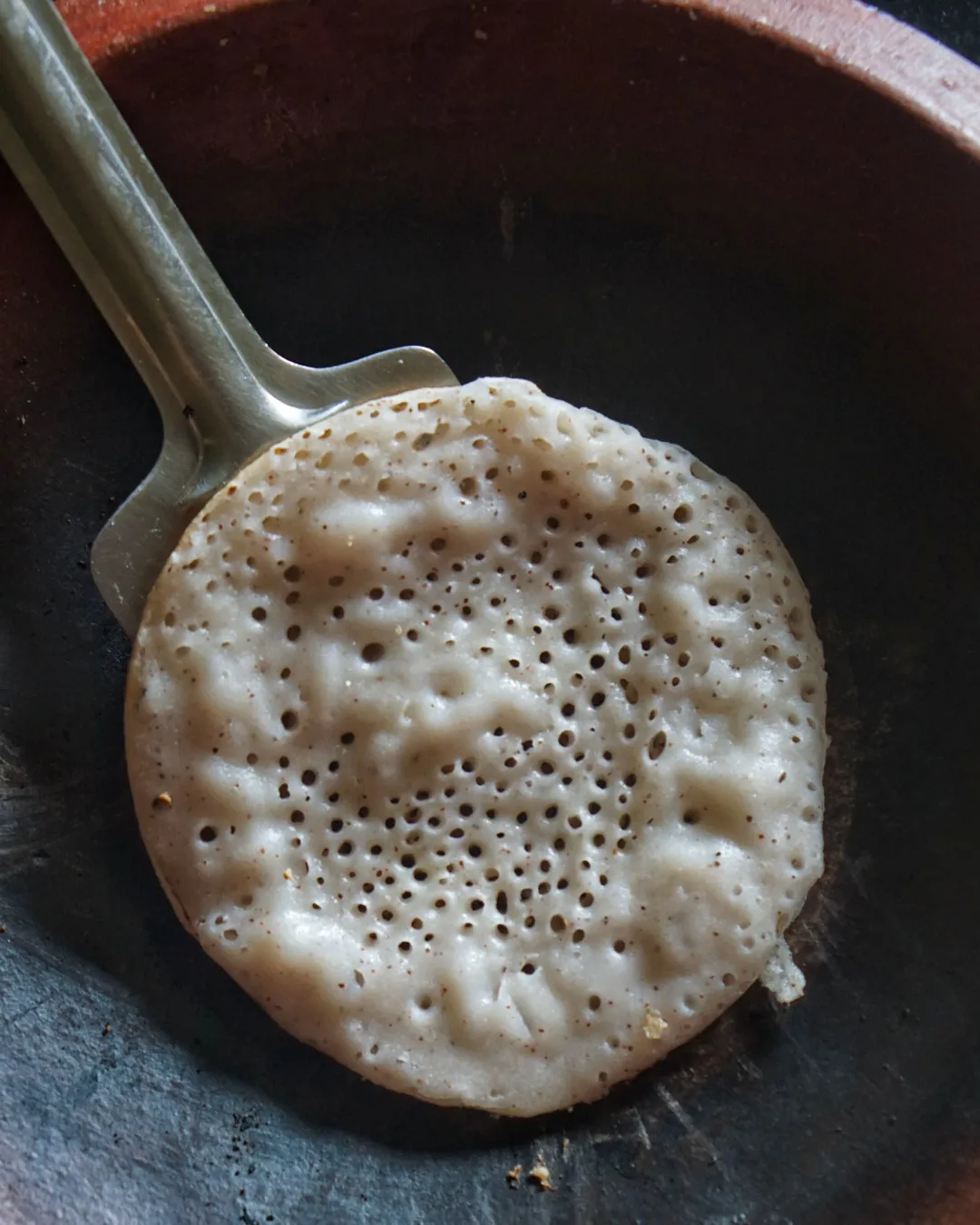
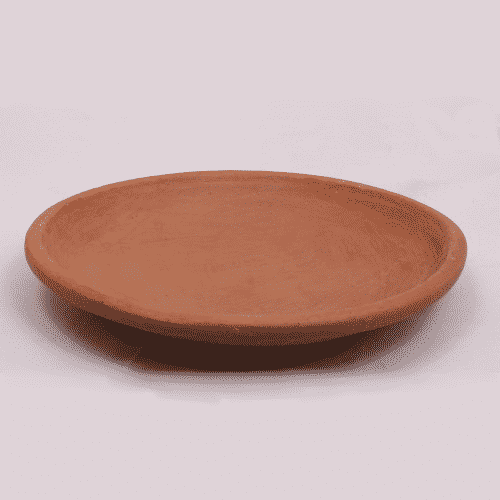
An appam pan can do the job too, but there is something about the clay vodu pan that makes this dose extra yum. Pour the batter, leave it alone, cover, and let it cook. No spreading and no flipping.
My little addition is to whisk the batter before pouring each rotti. It gives me those lovely, spongy, Surnoli-like dots. It is a small step, but one I love.
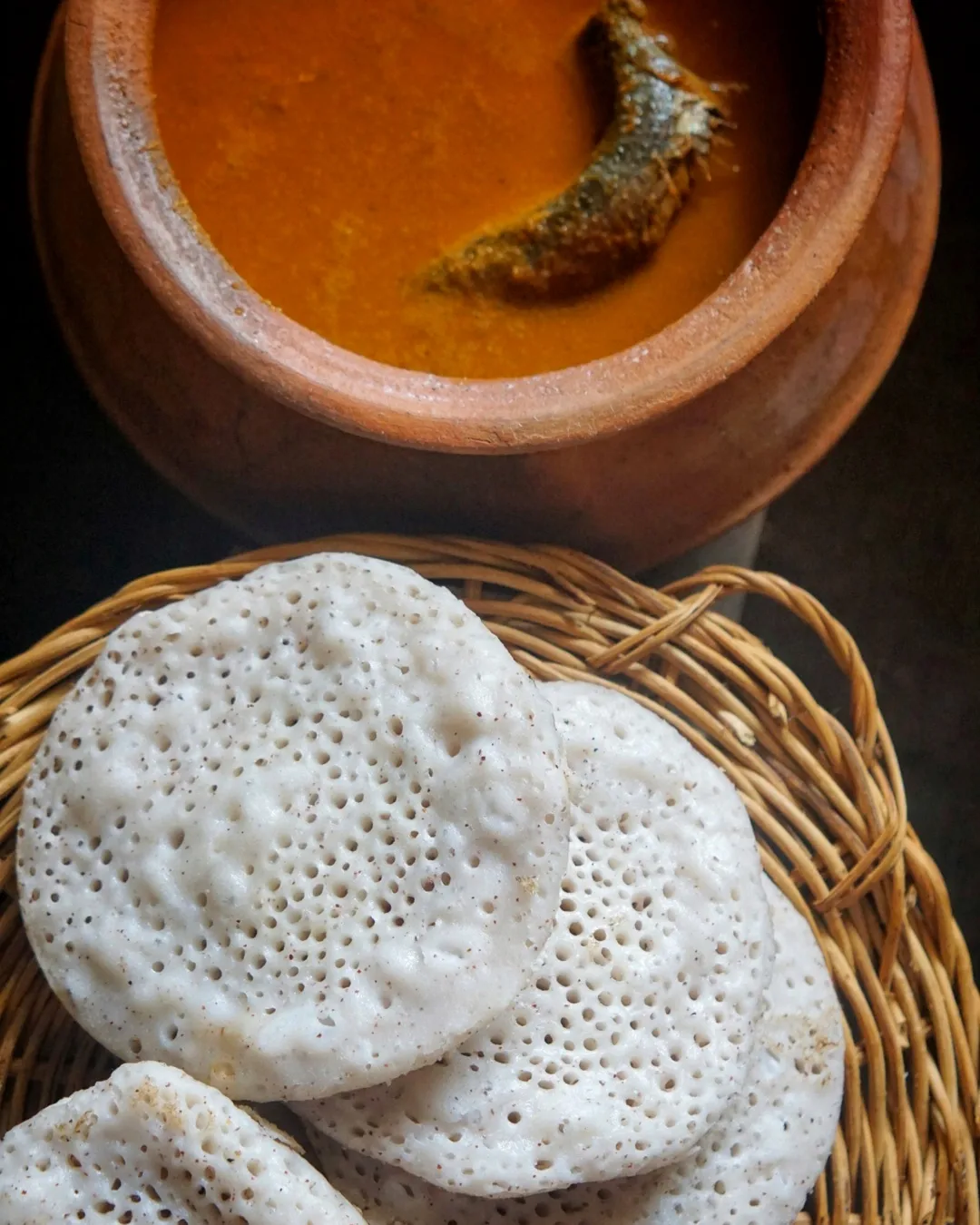
Kappa Rotti / Vodu Dose
Ingredients
Ingredients
- 2 cups dosa rice or raw idli rice
- ½ cup freshly grated coconut
- 2 to 3 tablespoons cooked rice
- Salt, to taste
- Water, as needed for soaking and grinding
Instructions
Method
- Soak the rice. Wash the rice and soak it in plenty of water for 4 to 6 hours. Drain well before grinding.
- Grind the batter. Add the soaked rice, grated coconut, cooked rice and salt to a mixer. Add water a little at a time and grind until smooth. Aim for a pourable, medium-thick batter, similar to regular dosa batter. It should flow off the ladle rather than sit in a lump. There is no fermentation step.
- Heat the pan. Heat a prepared clay vodu pan over medium-high heat, following its maker's guidance. A suitable non-stick or appam pan can also be used. Do not grease the cooking surface for this recipe. With a clay pan, bring it up to heat gradually.
- Whisk and pour. Give the batter a little whisk, then pour a large ladleful into the centre of the hot pan. Do not spread it with the ladle as for a regular dosa. Let the rotti settle on its own.
- Cover and cook. Tiny holes will begin to appear on the surface. Cover with a lid, lower the heat and cook for about 1 to 2 minutes, or until the top is fully set with no wet or gooey batter remaining. The exact time will depend on the pan and the thickness of the rotti.
- Lift it off. Gently loosen and remove the cooked rotti. Do not flip it. Stir or whisk the batter before making the next one, and repeat with the remaining batter.
- Serve hot. Bring them straight to the table with Buthai Gassi, Kori Gassi or a favourite Mangalorean curry. For me, this is exactly the sort of meal a rainy day calls for.
Notes
- Give the pan a little patience. The first two or three rottis can be trickier to lift off a clay pan, much like those first dosas on a cast iron tawa. Make sure each one is cooked before gently loosening it.
- Whisking is my addition. The rottis can be made without it too. I like the extra sponginess it gives me.
- Keep the batter pourable. Start with less grinding water and adjust gradually. If it is too thick to settle on its own, stir in a little more water.
- Cook only on one side. The lid helps the top cook through while the underside rests against the pan.
From the vodu pan
The clay pan
Serve Kappa Rotti with Kori Gassi or Yetti Bendekayi Gassi.
